Diagnose water ingress
without guessing.
IngressIQ guides you through the evidence on site, rules out the causes that do not fit, ranks what remains, and produces a standards-cited report you can hand to a client. Your first inspection is free.
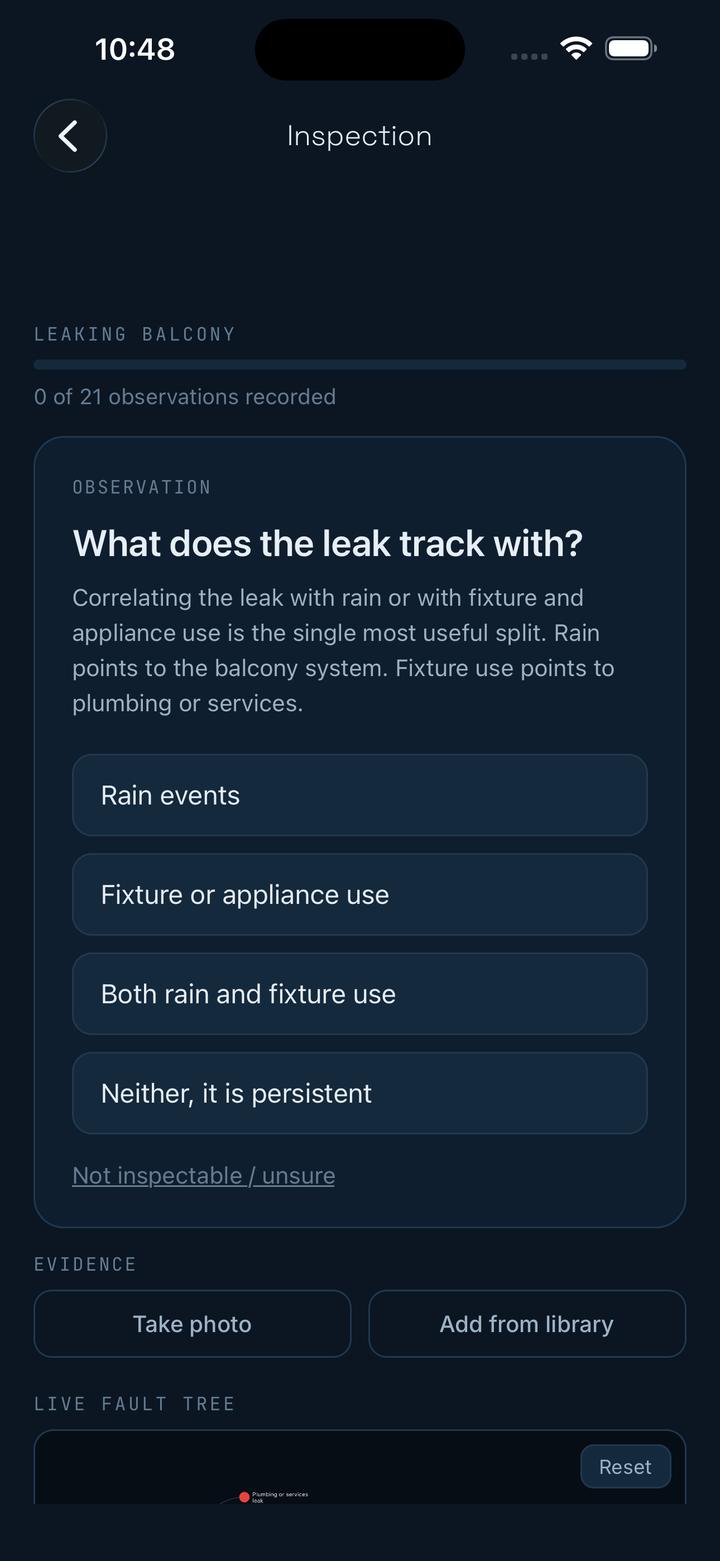
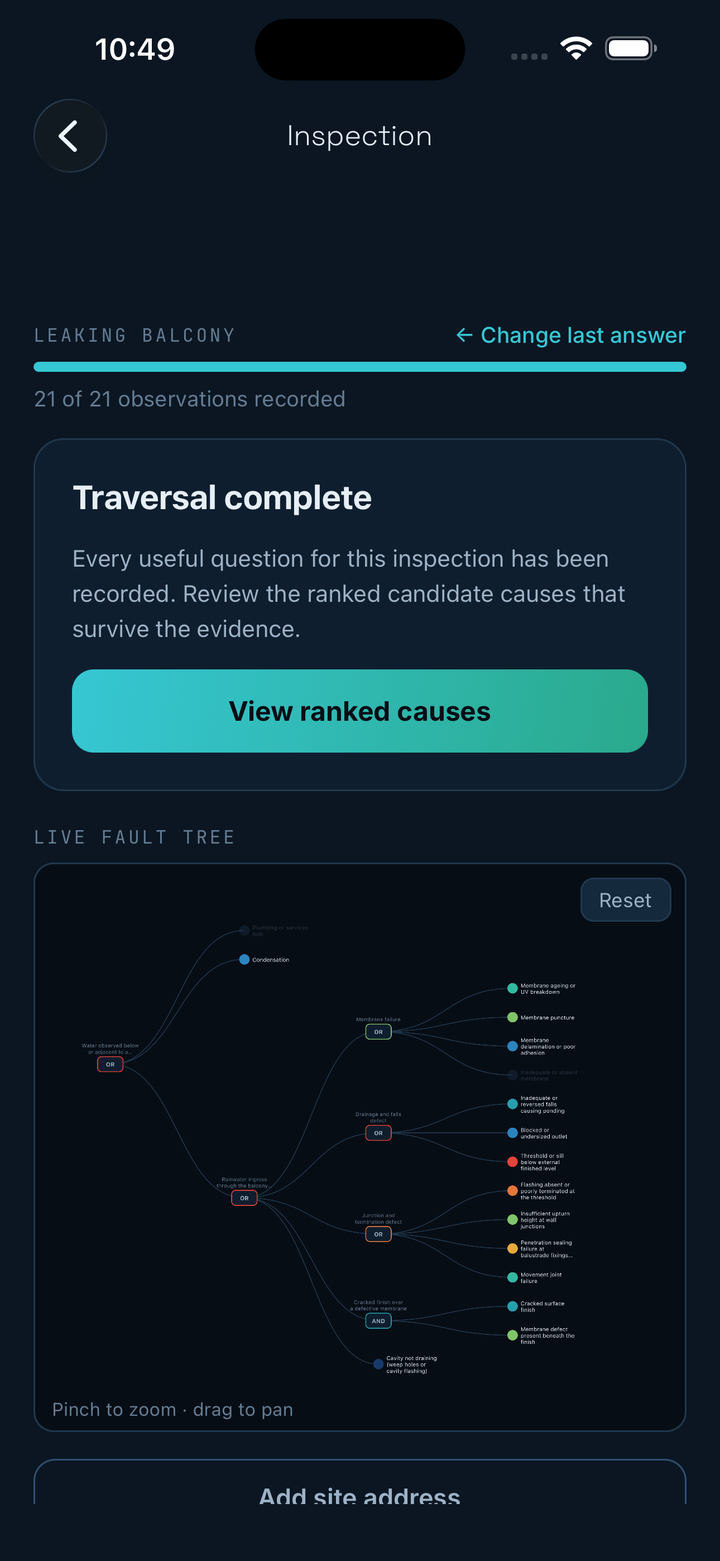
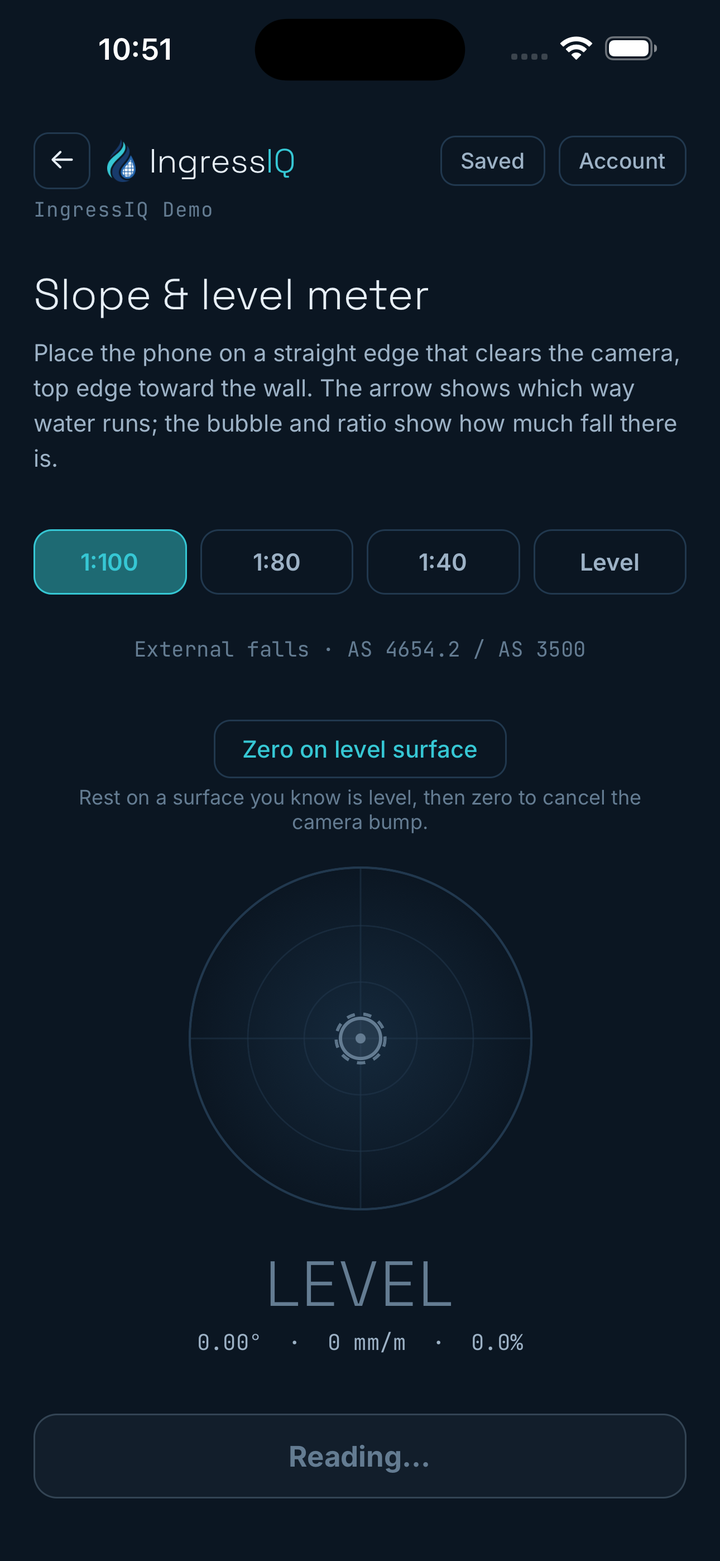
Here is what happens when you run an inspection.
Most leak reports guess. Then over-classify to be safe.
Water ingress is diagnosed on instinct and checklists, and written up defensively. Causes get listed without being ruled in or out. Everything gets stamped high risk to cover the author. The client pays for invasive work that may not address the real cause, and the report does not hold up when challenged.
It reasons the way a good diagnostician does.
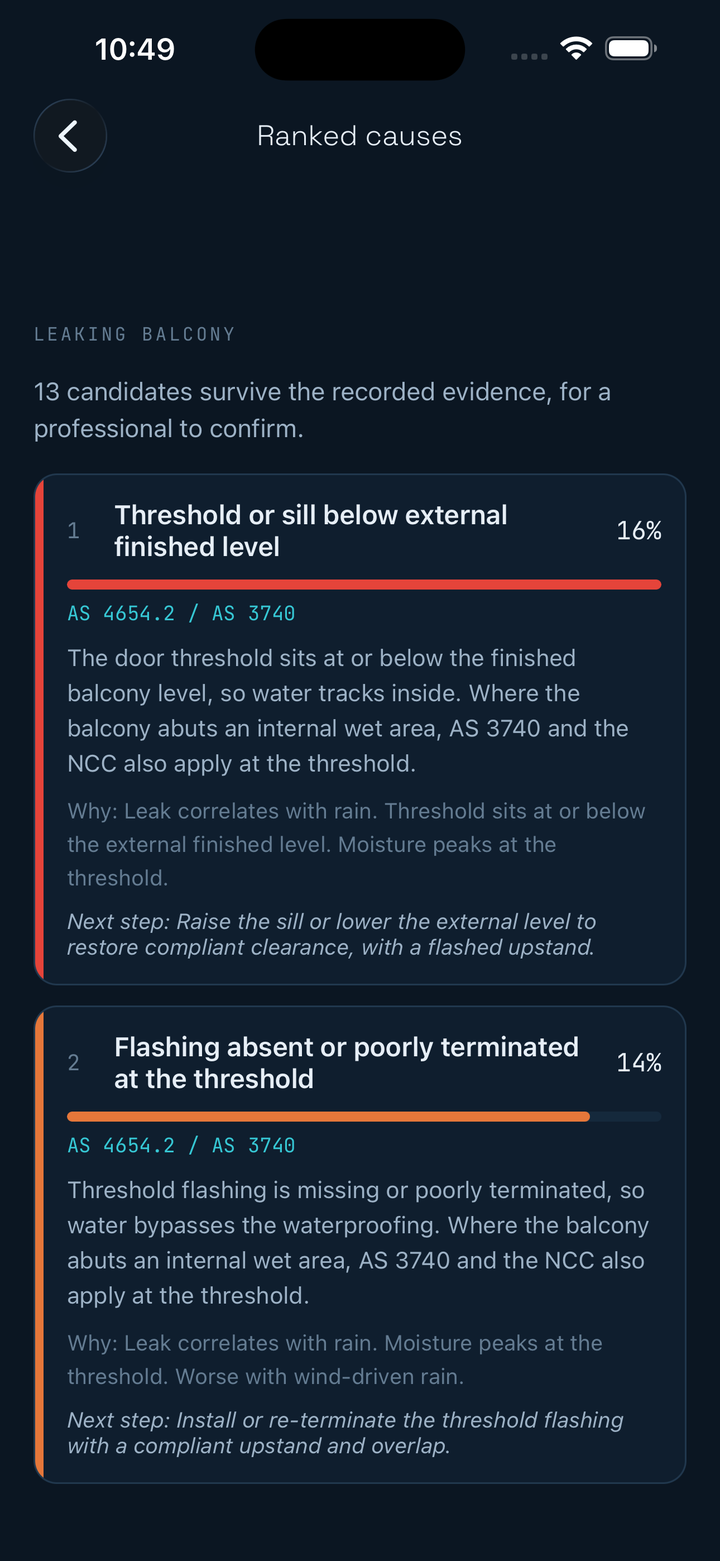
IngressIQ models every plausible cause of a leak as a fault tree. As you record what you observe on site, it rules out the causes the evidence excludes, and asks only the next question that actually separates what is left. No fixed checklist. You finish with a short, ranked list of the causes that survive, each with its standard reference, ready for you to confirm.
Find the cause. Check the design. Weigh the risk.
Not everything is high risk. We will tell you when it is.
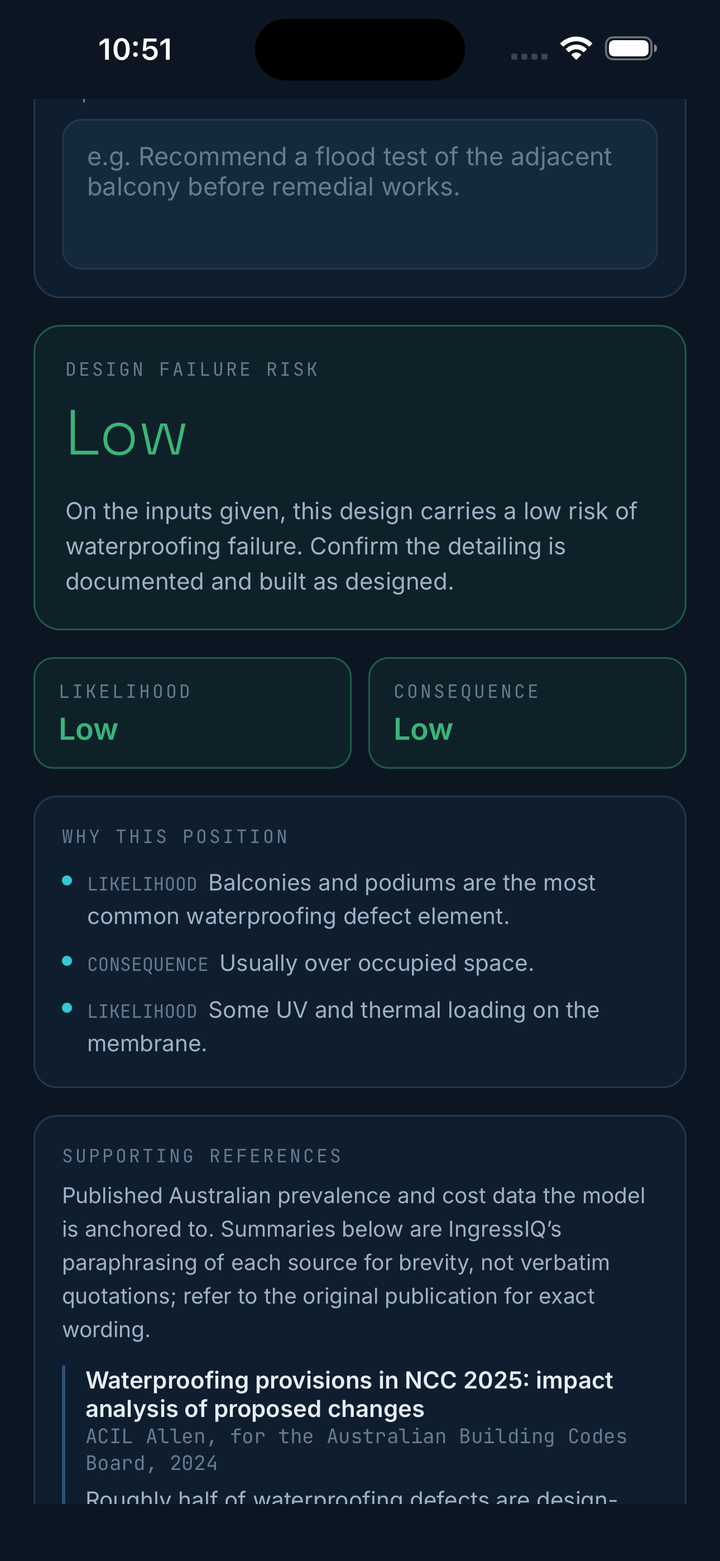
The industry reflexively calls every leak high risk to stay safe. IngressIQ instead weighs whether a problem is a durability matter or a genuine structural-safety one, using published Australian prevalence and cost data rather than the defensive default. That means defensible reports, and clients who spend on the work that is actually warranted.
A durability issue and a structural-safety issue are not the same problem. IngressIQ separates them, on the evidence.
Every conclusion cites its standard.
Each surviving cause and observation carries its reference, so a report is defensible rather than an opinion. IngressIQ works to AS 3740 (internal wet areas), AS 4654.1 and AS 4654.2 (external above-ground waterproofing), AS/NZS 3500.3 (drainage), AS 3600 (concrete), and BS 8102 for below-ground work where Australia has no dedicated standard, all within the National Construction Code (NCC), the governing code that sits above the standards and calls them up.
Reports that go out under your name.
Add your company name and logo and IngressIQ produces clean, standards-backed PDF reports branded as yours. Save every inspection, and share a read-only report by secure link or QR code with your client or the builder.
Built by waterproofing, construction, and safety professionals.
IngressIQ was developed by a team of waterproofing professionals, construction engineers, building designers, and safety inspectors. Its fault-tree method is the evidence-led reasoning long used in high-risk industries, where the core question is always the same: is it safe? The trees and risk models are drawn from real water-ingress investigations and the standards that govern them, so the reasoning reflects field practice rather than theory.
standards referenced
one tool
to a standard
Frequently asked.
Diagnose your next leak on the evidence.
Sign up free and run a full inspection end to end: from the evidence, to the ranked causes, to a branded report. No credit card.